
What is the service life of plastic fuel tanks for passenger cars?
Plastic fuel tanks are used in most modern passenger cars. They are lightweight, corrosion-resistant, and able to withstand exposure to fuel and environmental factors. But how durable is such a tank, and what determines its lifespan? Let’s take a closer look.
What Is a Plastic Fuel Tank?
Modern plastic fuel tanks are manufactured using two main technologies, each with its own characteristics:
1) Composite tanks
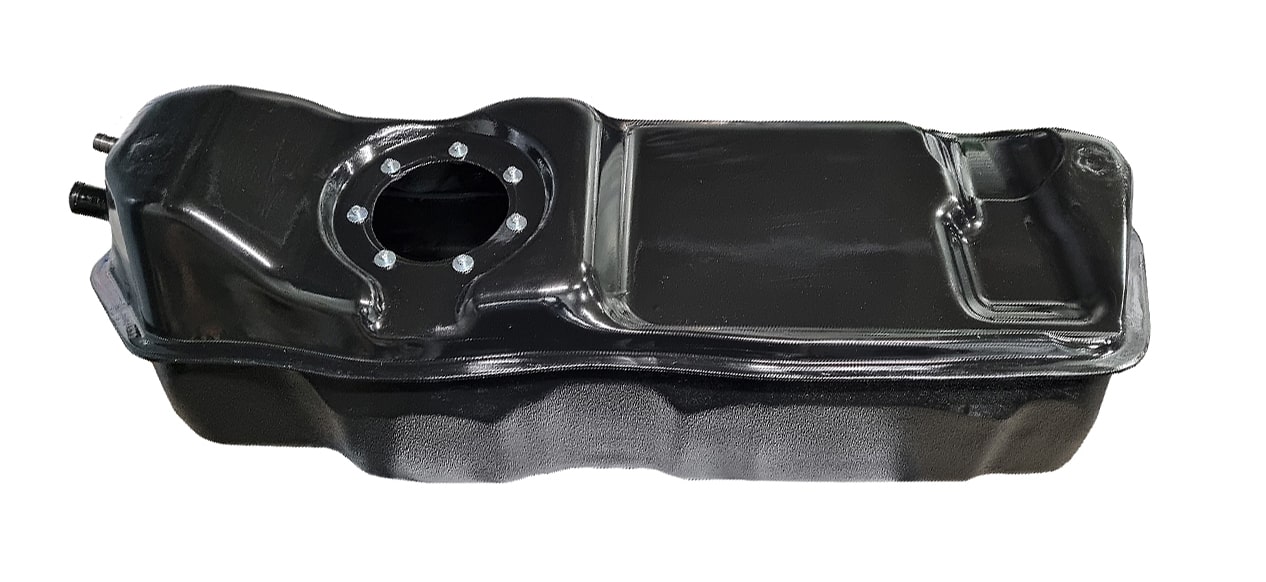
Made from modern composite materials based on specially formulated polyester resin for resistance to diesel fuel and gasoline, reinforced with fiberglass and carbon fiber.
- Leak-proof and resistant to gasoline and diesel fuel;
- Lightweight compared to metal counterparts;
- High chemical resistance, not susceptible to corrosion;
- Composite tanks are virtually unaffected by additives and bioethanol;
- Optimal operating temperature range: −60…+200 °C;
- Behavior under heat: retains shape and stiffness;
- Behavior in cold weather: remains stable.
Composite tanks made from polyester resins are technologically advanced, stronger, and more durable, but they are expensive and complex to manufacture.
2) HDPE Tanks
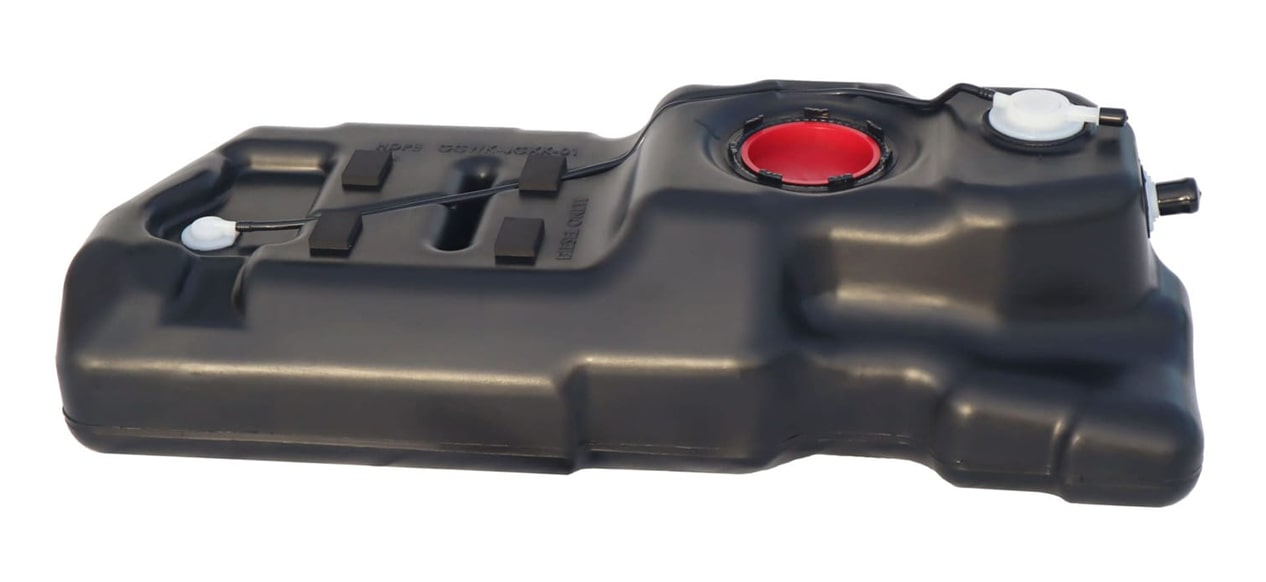
Made from multilayer polymers (typically high-density polyethylene — HDPE). This construction provides:
- Leak-proof and resistant to gasoline and diesel fuel;
- Lightweight compared to metal counterparts;
- Resistant to chemical exposure and corrosion;
- Sensitive to aggressive additives and solvents;
- Use of poor-quality gasoline may gradually degrade the inner layer;
- Ethanol additives (E10 and above) accelerate polyethylene aging;
- Optimal operating temperature range: −50…+80 °C;
- Behavior under heat: softens and may deform;
- Behavior in cold weather: becomes less flexible.
HDPE Tanks — Practical, Affordable, and Lightweight Solution for the Automotive Industry
HDPE fuel tanks are widely used in mass-produced passenger cars due to their practicality, low cost, and lightweight construction.
Average Lifespan of a Plastic Fuel Tank
The average lifespan of a plastic fuel tank for passenger cars ranges from 10 to 20 years, depending on operating conditions and fuel quality. With proper care and no mechanical damage, the tank can last as long as the vehicle itself.
Signs of Wear in a Plastic Fuel Tank
Visual and operational symptoms of a worn fuel tank include:
- Fuel smell under the vehicle
- Traces of leaks or wet spots on the tank
- Cracks and surface deformations
- Increased fuel consumption due to leaks
Can a Plastic Fuel Tank Be Repaired?
Yes, a plastic tank can be repaired, but only in certain cases. Small cracks and punctures can be sealed with plastic welding or epoxy compounds. However, serious damage makes repairs unsafe, and in such cases, replacement is recommended.
How to Extend the Lifespan of a Fuel Tank
Simple maintenance rules include:
- Use high-quality fuel: Reduces chemical impact on the internal walls of the tank. (Applies mainly to HDPE tanks)
- Avoid mechanical damage: Do not strike the tank during suspension or underbody repairs.
- Check for leaks: Inspect the tank at least once a year, especially before winter.
When to Replace a Plastic Fuel Tank
If the tank starts leaking, deforms, or loses its seal, do not compromise your safety — the best solution is to replace it with a new one.
Modern fuel tanks are available as original parts or compatible aftermarket versions suitable for most passenger car models. In our online store, you can order a plastic fuel tank for your vehicle at manufacturer prices.