
...

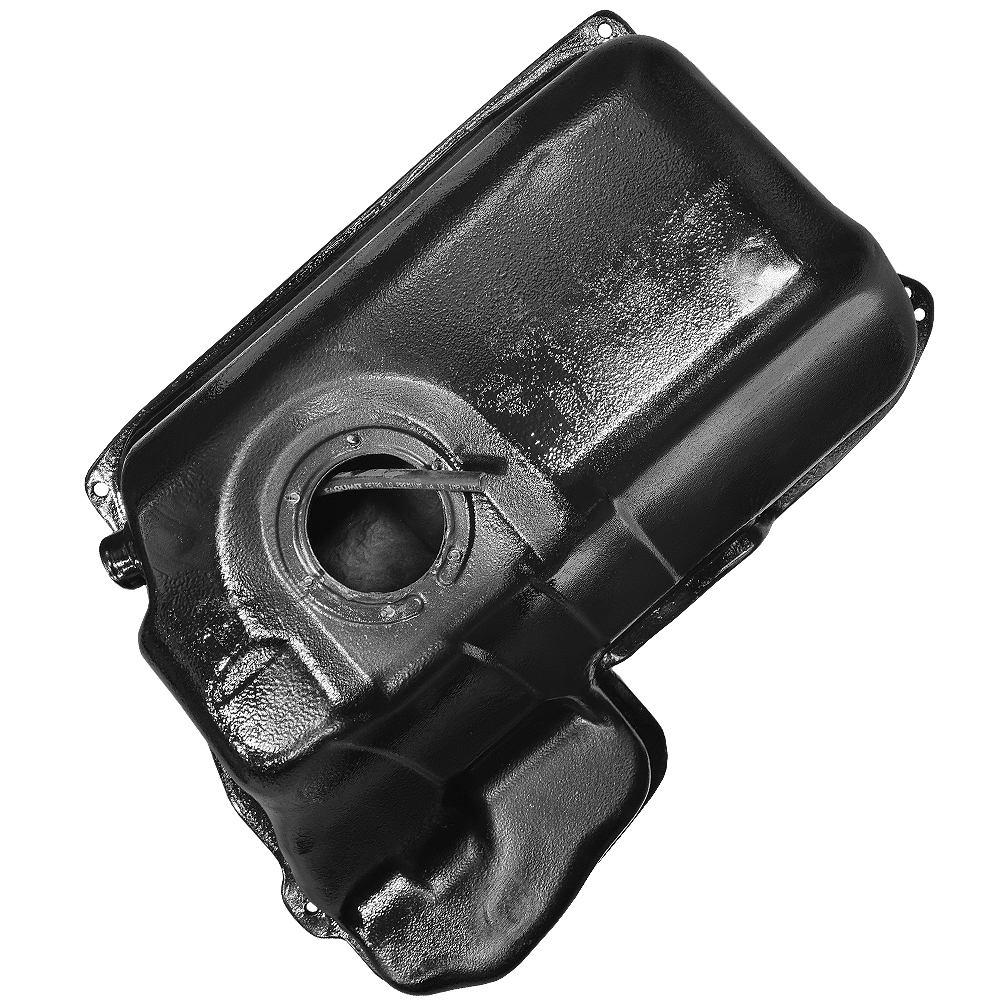
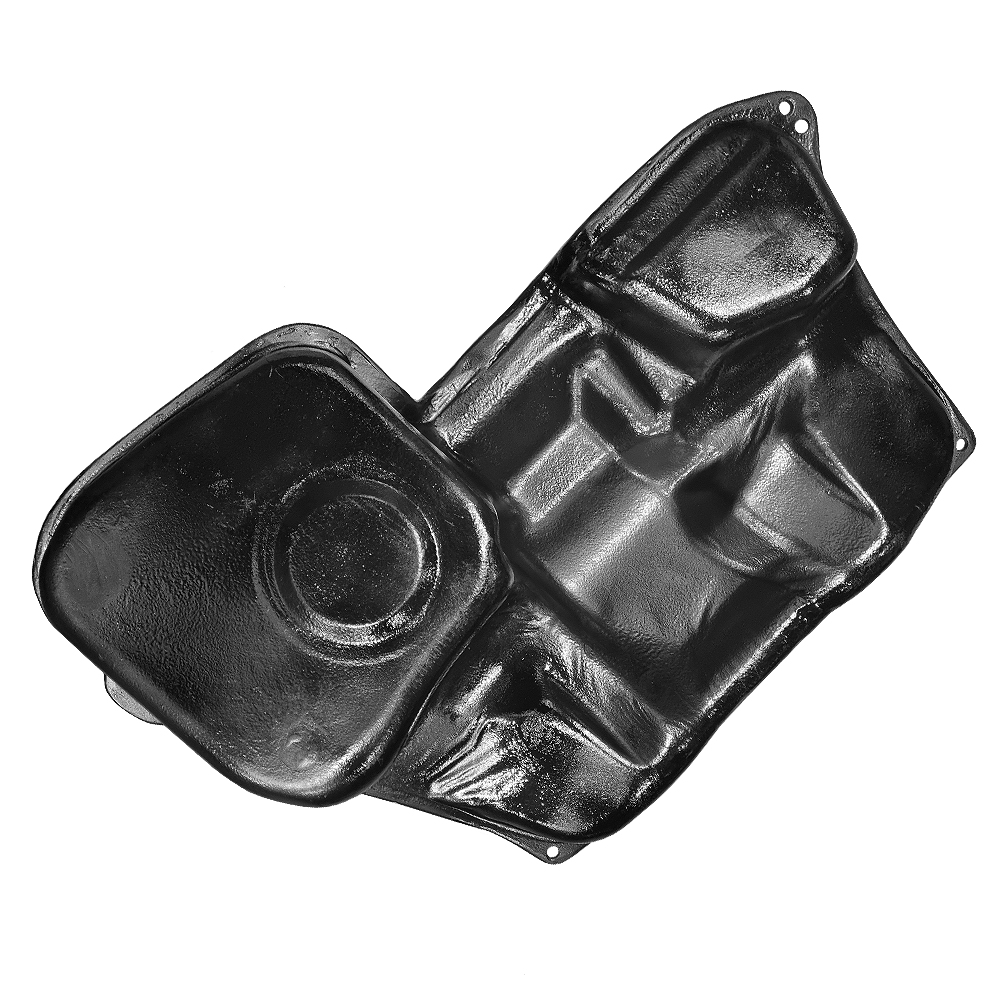
Plastic fuel tank – Audi 100 4X4 quattro C3 S6 S4 C4 V8

PL0034

489.00

Brand

Audi

Condition

New

Originality

Analogue

Guarantee

3 years

Made in

European Union

In stock

Insurance-m Tank delivery is insured

Manufacturer number: 4A0201075L

Suitable for models: Audi 4X4 – 100 C3 quattro S6 S4 C4 C4 200 V8 – Petrol/Dizel (1982-1998)

Audi 5000 Quattro (AWD)
Audi 200 Quattro 10V / 20V Type44
Audi V8 D11 Quattro 3.6+4.2L
Audi A6 C4 quattro
Audi A6 S6 20V / V8 Type C4
Audi S6 Plus V8

Material: Composite material based on polyester resins, glass fiber and carbon fiber fabric, resistant to diesel and gasoline and with a long service life.

Wall thickness: 4-5 mm

Weight: 10 kg

Size: 1000 x 800 x 500 mm

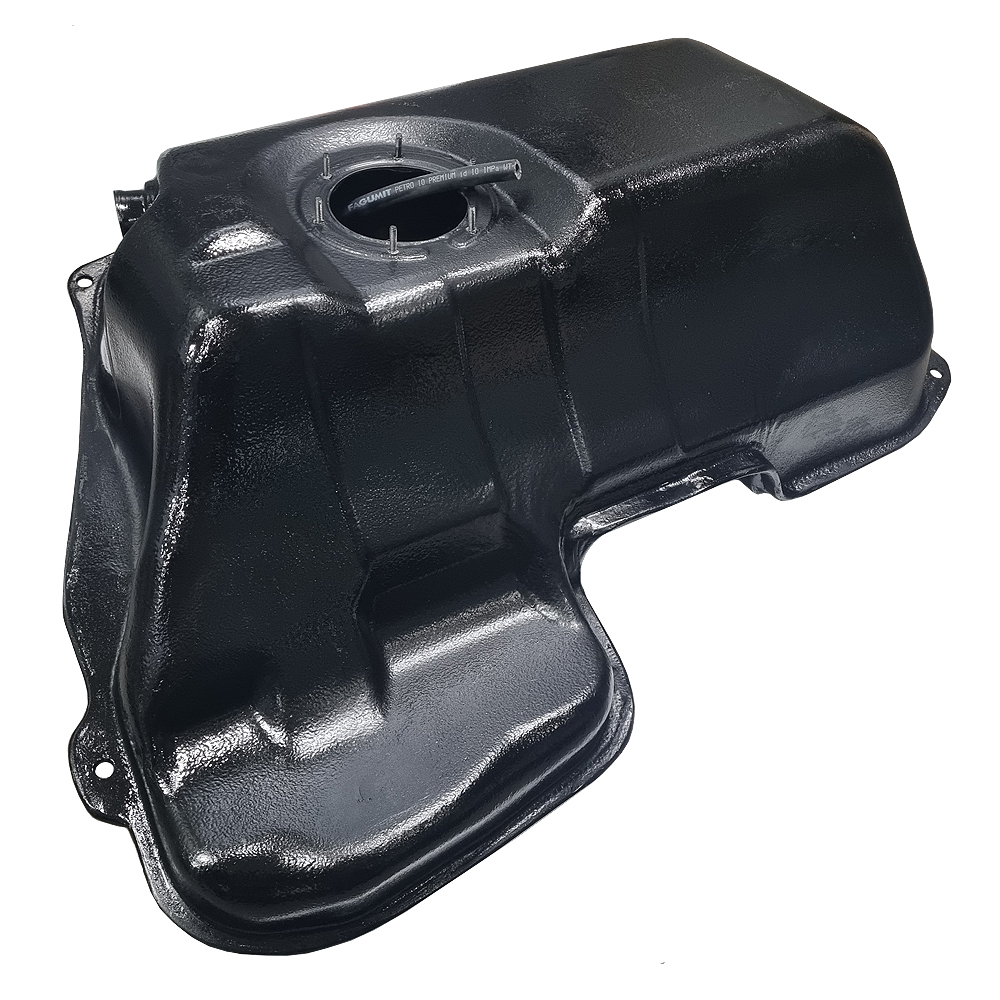
Equipment: Tank and inside the tank there is a bracket for the fuel pump.

The inside of the fuel tank has hydro-impact baffles made from factory drawings. The presence of partitions (serve to reduce fuel fluctuations).

During installation, the fuel tank is secured to the factory fixings.

Buy online Plastic fuel tank – Audi 4X4 – 100 C3 quattro S6 S4 C4 200 V8 – Petrol/Diesel (1982-1998)

Plastic fuel tanks are manufactured in-house – from a modern composite material based on polyester resins, fiberglass and carbon fabrics. They are highly reliable and nearly as resistant to impact as steel.

Plastic fuel tank – Audi 4X4 – 100 C3 quattro S6 S4 C4 C4 200 V8

! Each tank is pressure-tested after production to ensure there are no fuel or vapour leaks.

Upgrade your classic Audi 100 4×4 Quattro with our high-quality plastic fuel tank — a durable, corrosion-resistant replacement for aging or unavailable original metal tanks.

Why Choose This Plastic Fuel Tank

  • Corrosion-resistant and leak-proof — unlike steel, the plastic tank will not rust or corrode over time.
  • Lightweight and easier to install — reduces overall vehicle weight and simplifies installation, even on older Quattro models.
  • Fully compatible — designed to match the original fitment points for Audi 100 4×4 Quattro (C3, S6, S4, C4 V8), so no modifications needed.
  • Long service life — stable under normal use and resistant to various fuels, additives, and condensation.
  • Improved reliability — eliminates common problems of rusted metal tanks: leaks, fuel contamination, and structural failure.

Compatibility & Fitment

This fuel tank is explicitly engineered for the following models:

  • Audi 100 / 200 4×4 Quattro — C3 generation
  • Audi S6 / S4 (C4 platform) with V8 engines

Manufactured to match mounting points, fuel sender placement, filler neck position, and fuel line connections of the original tank. Ideal for restorations or conversions when original metal tanks are no longer available.

Tank Specifications & Features

  • Material: Composite material based on polyester resins, fiberglass, and carbon fabric, resistant to gasoline and diesel fuel and designed for long-term durability.
  • Corrosion- and condensation-resistant construction
  • Weight: significantly less than original steel tank (improves fuel efficiency and handling)
  • Design: direct swap — no welding or cutting required
  • Lifetime: built for many years of service under normal conditions

Installation & Maintenance Tips

  • Use new fuel hoses and clamps when installing to ensure leak-proof connections.
  • Rinse the tank interior before first fill to remove any transport dust or debris.
  • Check seal and filler neck alignment carefully — the tank is designed for bolt-in replacement with original mounts.
  • For sealing, it is recommended to use a fuel-resistant sealant.

When to Consider Replacement

If your original metal tank shows signs of corrosion, leaks, dents, or is incompatible with modern fuels — replacing it with this plastic tank is a safe and long-lasting solution.

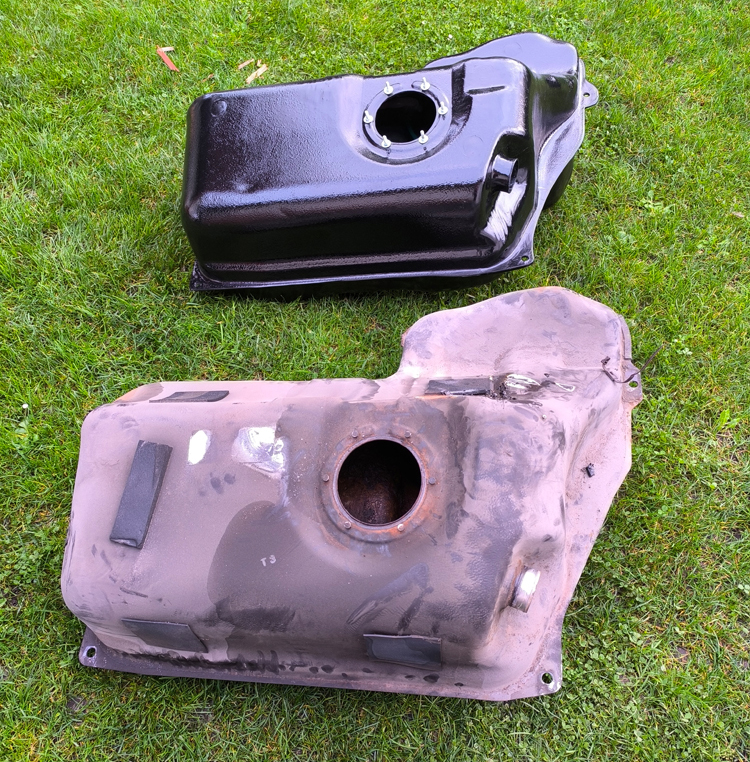
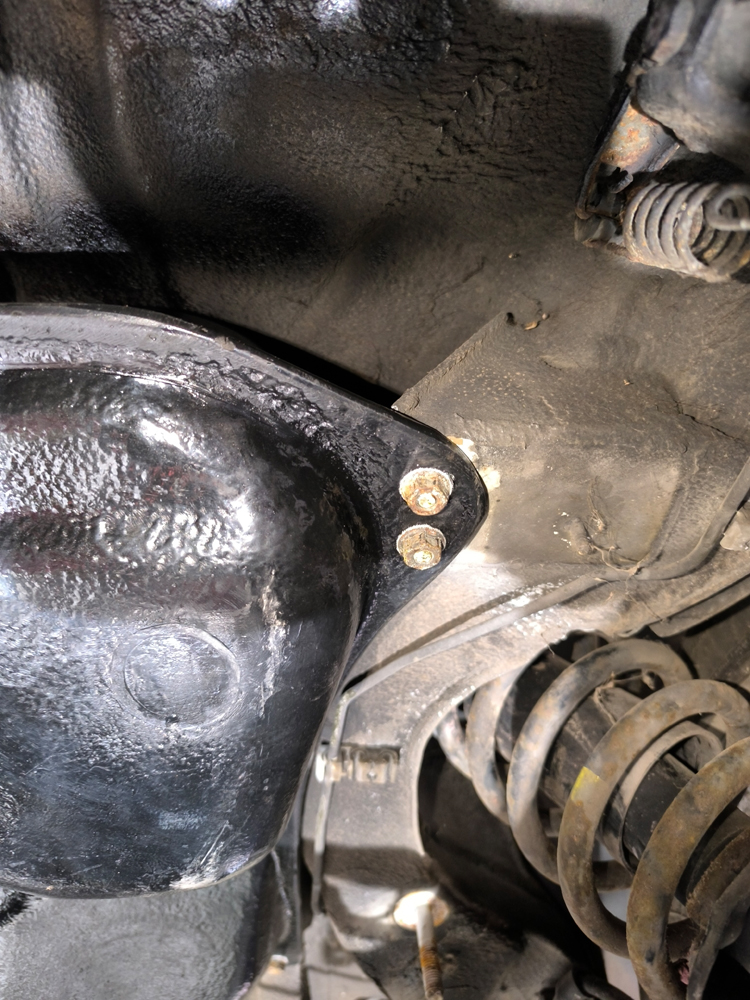
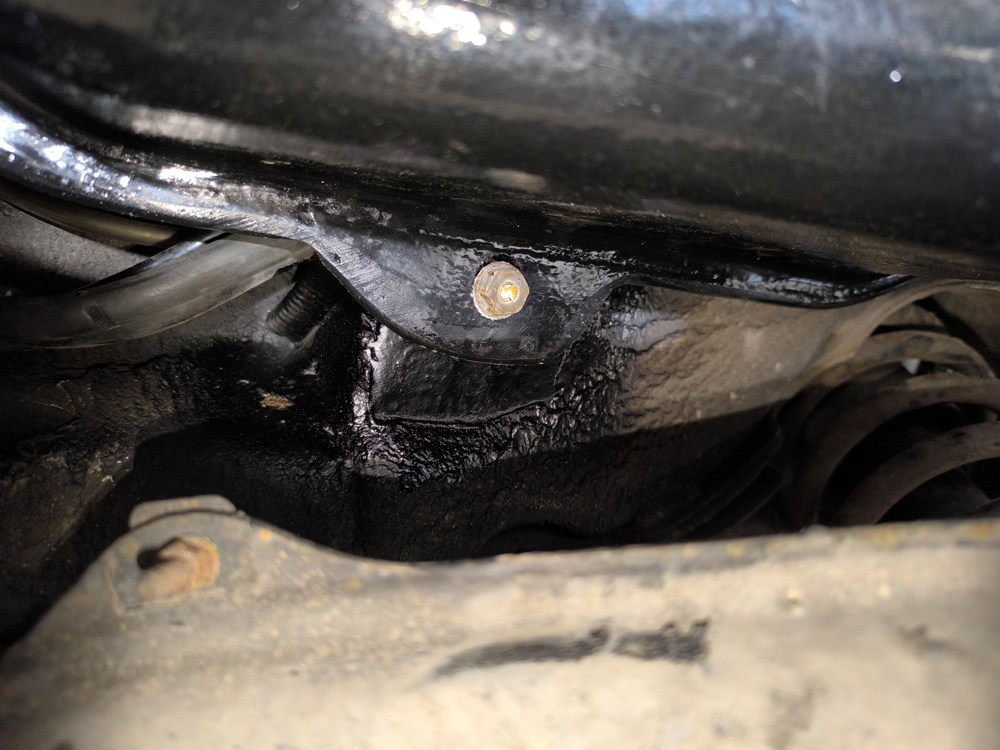
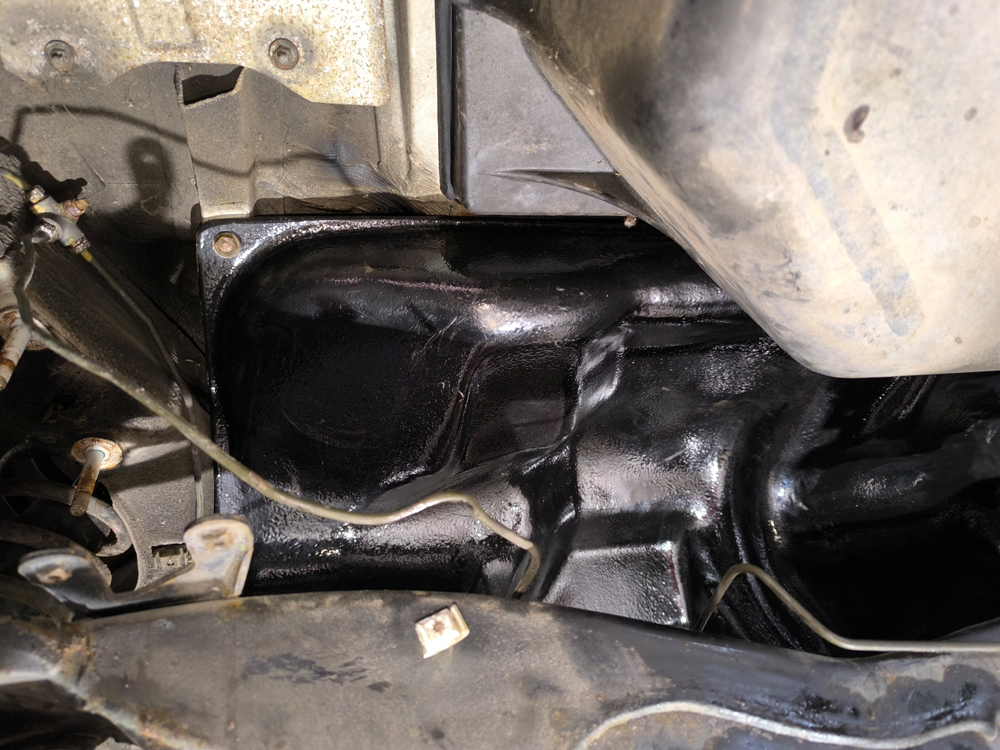
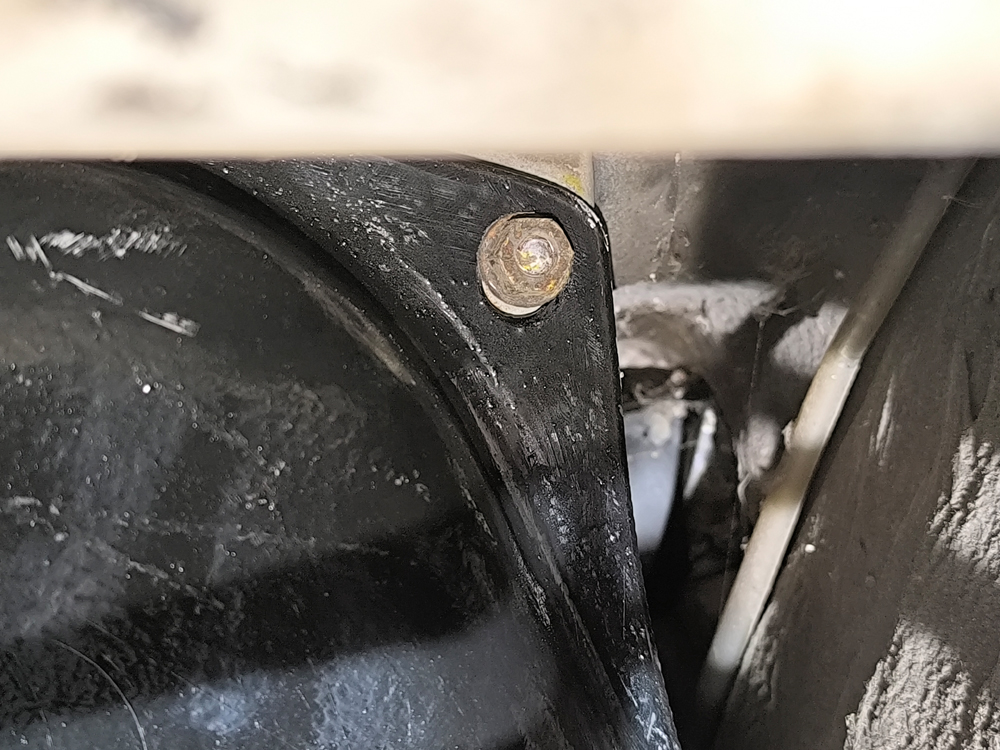
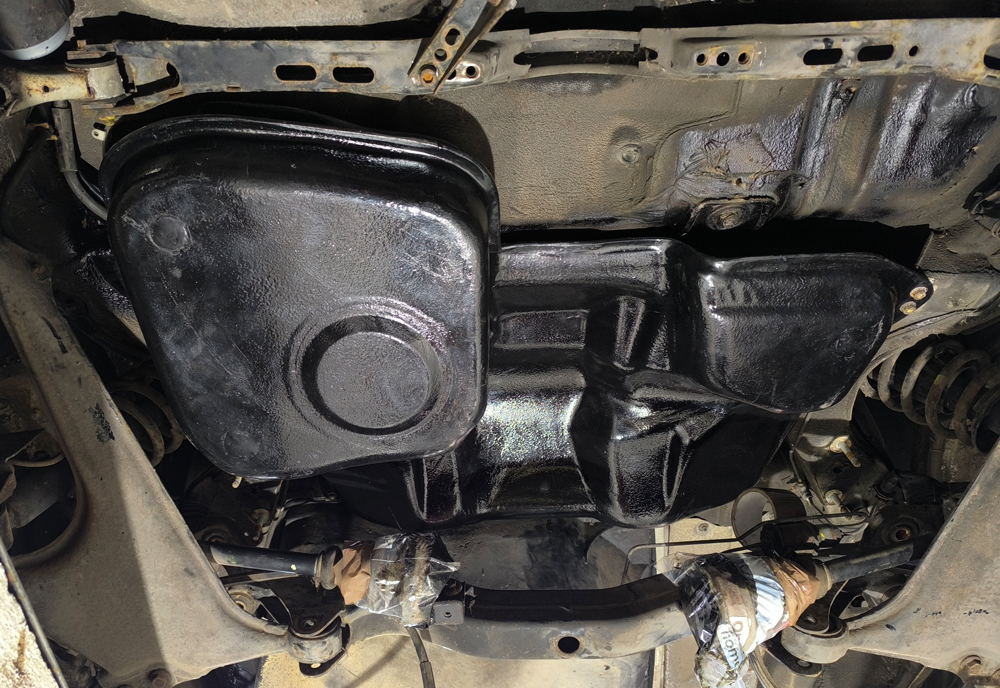
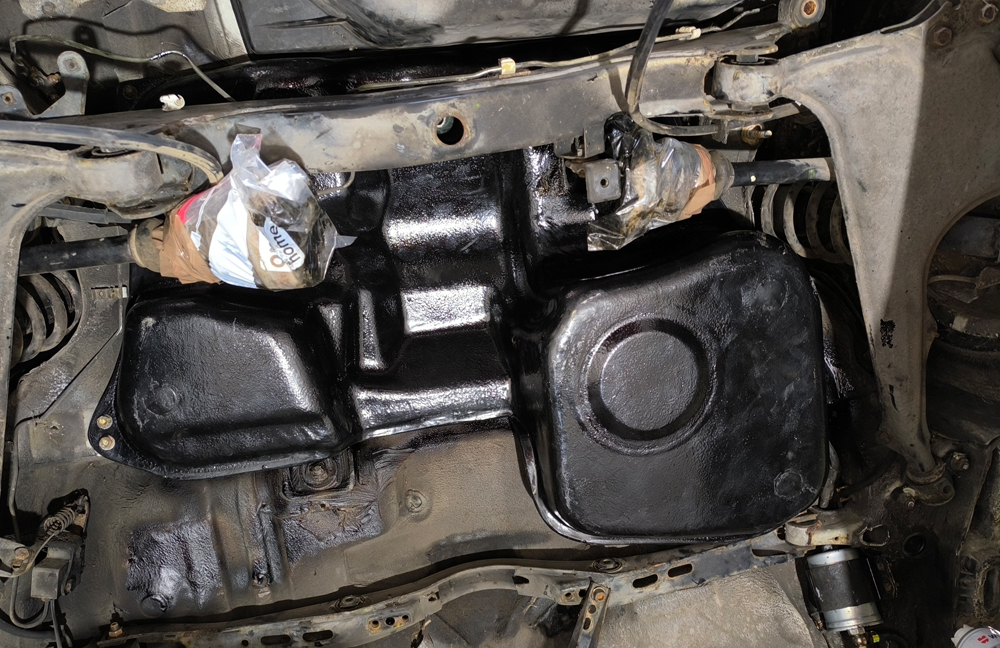
Some comparison and installation photos of the plastic fuel tank – Audi 4X4 – 100 C3 quattro S6 S4 C4 200 V8 – Petrol/Diesel (1982-1998)

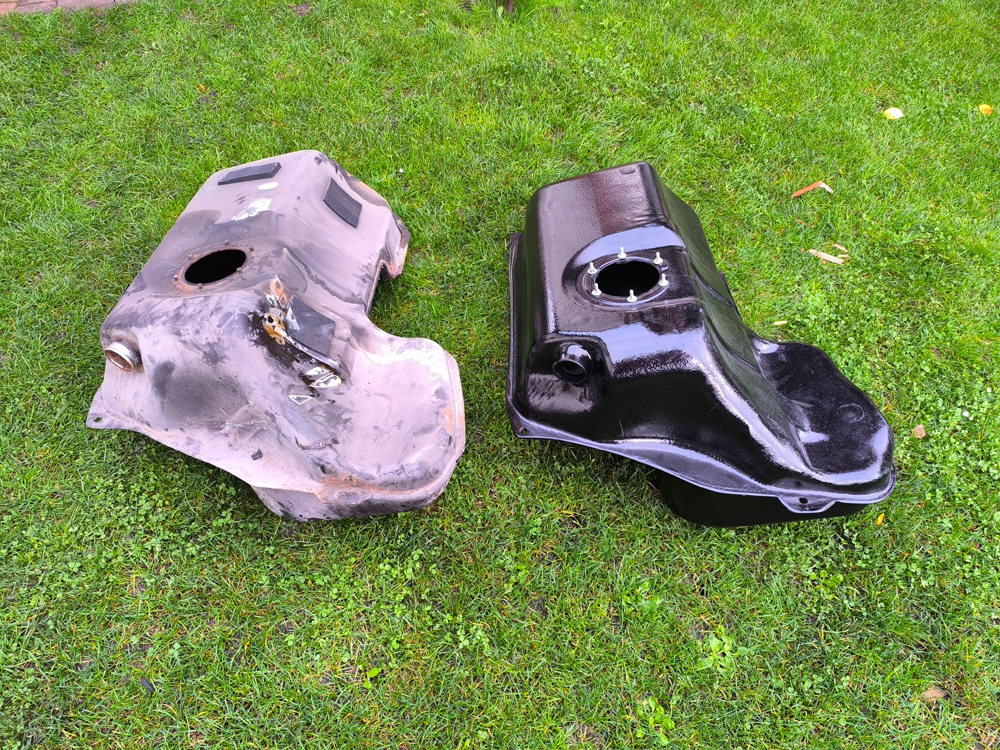
The fuel tanks are manufactured in Latvia in full compliance with the technical regulations and standards of the European Union.

If you have doubts about compatibility or proper installation for your specific vehicle, just contact us via WhatsApp — our team will help you choose the right tank and answer all your questions.

Как дела

Step-by-Step Guide — Replacing the Fuel Tank on an Audi 100 (quattro / 4×4 — C3 / C4 / S-series / V8)

Difficulty: Moderate ® Advanced (requires lifting the car, handling fuel, working under the vehicle).

Safety first: If you’re not comfortable working with fuel systems or heavy lifting, hire a professional.

WHAT YOU’LL NEED

Tools

  • Floor jack + good jack stands (rated for vehicle weight)
  • Small transmission / bottle jack or a second jack to support tank
  • Socket set (metric), ratchet, extension
  • Screwdrivers, pliers, pry bar
  • Fuel-line quick-disconnect tool set (for the OEM connectors)
  • Lock-ring tool / large screwdrivers and hammer (for fuel module lock ring) OR the correct factory

tool

  • Utility container / approved fuel jerry can
  • Fuel siphon or hand pump
  • Torque wrench (for critical fasteners; consult manual)
  • Wire brushes, rags, drain pan
  • Replacement hose clamps, new O-rings/seals, rubber straps or hangers if rusty
  • Safety equipment: gloves, eye protection, respirator if needed, fire extinguisher nearby

Parts & supplies

  • New fuel tank (or cleaned/repaired used tank)
  • New sender/fuel pump module gasket / lock ring O-ring (Engine Gasket Sealant)
  • New fuel line clamps or OEM quick-connect fittings
  • New filler neck seal (if applicable) and vent hoses if brittle
  • New rubber tank straps/isolation pads if corroded
  • New fuel filter (if in-line)

SAFETY & PREP

  • Work outdoors or in a very well ventilated area. No open flames, sparks, smoking.
  • Put a suitable fire extinguisher rated for flammable liquids within reach.
  • Relieve fuel system pressure before disconnecting lines.
  • Disconnect the negative battery terminal after relieving pressure.
  • Use jack stands — never rely on a jack alone. Chock front wheels.
  • Drain fuel into approved, grounded containers and dispose legally.

STEP-BY-STEP PROCEDURE

1 — Prepare vehicle

  • Park level, engage parking brake, chock front wheels.
  • Remove fuel pump relay/fuse and run engine until it stalls to relieve fuel pressure.
  • Disconnect the negative battery terminal.

2 — Drain fuel

  • Siphon as much fuel as possible into an approved container.

3 — Raise vehicle

  • Jack up and support with jack stands. Support tank with second jack.

4 — Disconnect connections

  • Filler neck, vent hoses, pump/sender wiring, fuel lines (use proper tools).

5 — Remove straps/mounts

  • With tank supported, unbolt straps. Lower slightly, check for any lines still attached.

6 — Lower & remove tank

  • Lower carefully, pull tank out. Two people recommended.

7 — Transfer pump/sender

  • Replace gasket/O-ring. Ensure float/sender arm moves freely.

8 — Inspect/replace ancillaries

  • Replace filler neck rubber, vent hoses, straps if rusty.

9 — Install new tank

  • Raise into place, connect filler, vents, lines, wiring. Reinstall straps.

10 — Prime & test

  • Reconnect battery, prime fuel pump by cycling ignition ON/OFF. Check for leaks.

11 — Final inspection

  • Start engine, check gauge, inspect again after short test drive.

TROUBLESHOOTING

  • Fuel smell ® Check clamps and seals.
  • Filler won’t align ® Adjust filler neck.
  • Engine won’t start ® Check pump wiring and prime system.
  • Fuel gauge wrong ® Reinstall sender correctly.

DISPOSAL

Dispose old fuel and parts legally at recycling or auto shop.

WHEN TO CALL A PRO

  • Heavy rust or seized fasteners.
  • If driveshaft/exhaust must be removed.
  • Unfamiliar with depressurizing fuel system.